
The Neurodegenerative Disease Congress
A new way to design grants — with the people who would use them sitting at the table from the start.
Most grantmaking happens behind closed doors. Adira built something different. The ND Congress brought together people living with neurodegenerative diseases, their caregivers, and the professionals working on solutions — and gave the majority of decision-making power to those with lived experience. The result was a slate of priorities and solutions that came directly from the people they would serve.
A different way to make grants
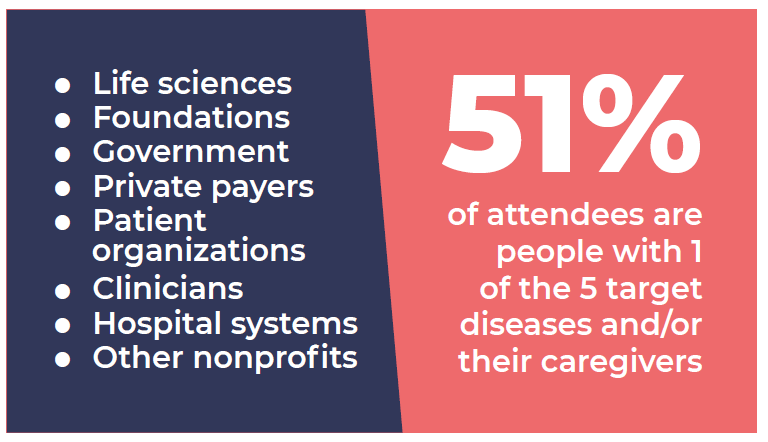
By 2022, Adira had already completed three rounds of competitive grants. The fourth round was going to be different. Instead of staff and advisors choosing the priorities, the ND Congress was designed to put that work in the hands of the people most impacted — with 51% of participants being people living with neurodegenerative diseases or their caregivers, and 49% being professionals with career expertise.
The model borrowed from large-scale, successful global health programs — the UN system, PEPFAR, and the Global Fund to Fight AIDS, TB, and Malaria — where governance includes the communities served. Adira adapted that approach for a U.S. foundation working across five neurodegenerative diseases: ALS, Alzheimer's disease and related dementias, Huntington's disease, multiple sclerosis, and Parkinson's disease.
The Congress was structured as a three-event series under a single arc: Listen, Learn, Act.
The Listen, Learn, Act arc
The series was designed across three convenings, each with a distinct purpose.
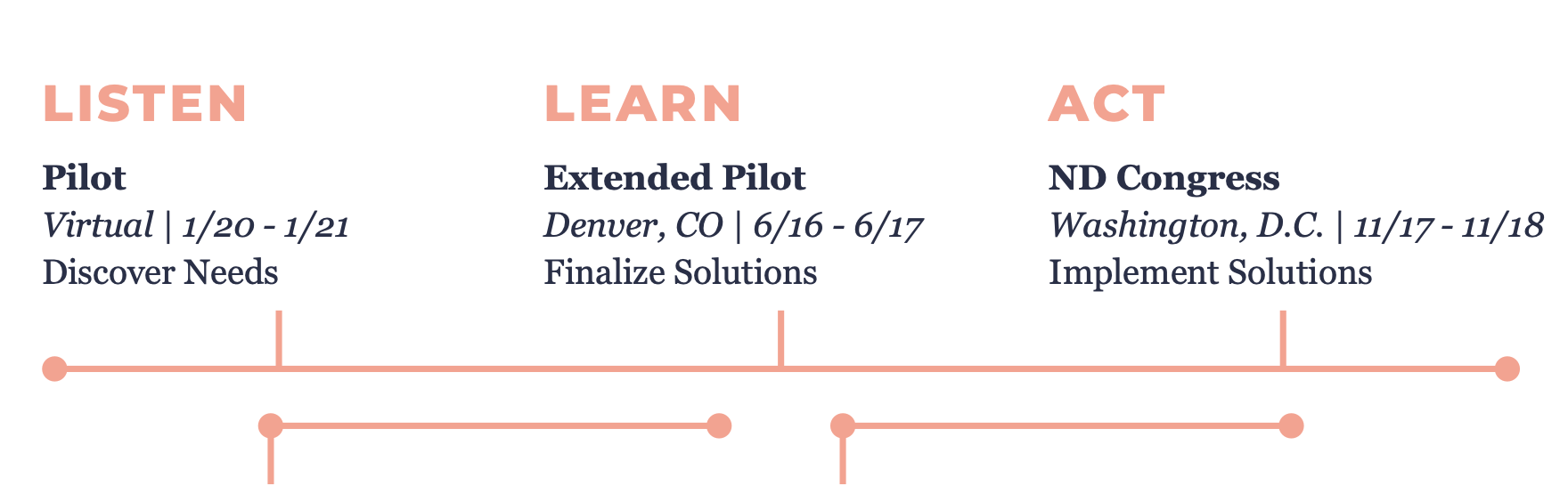
Listen
Pilot, January 2022 (virtual)
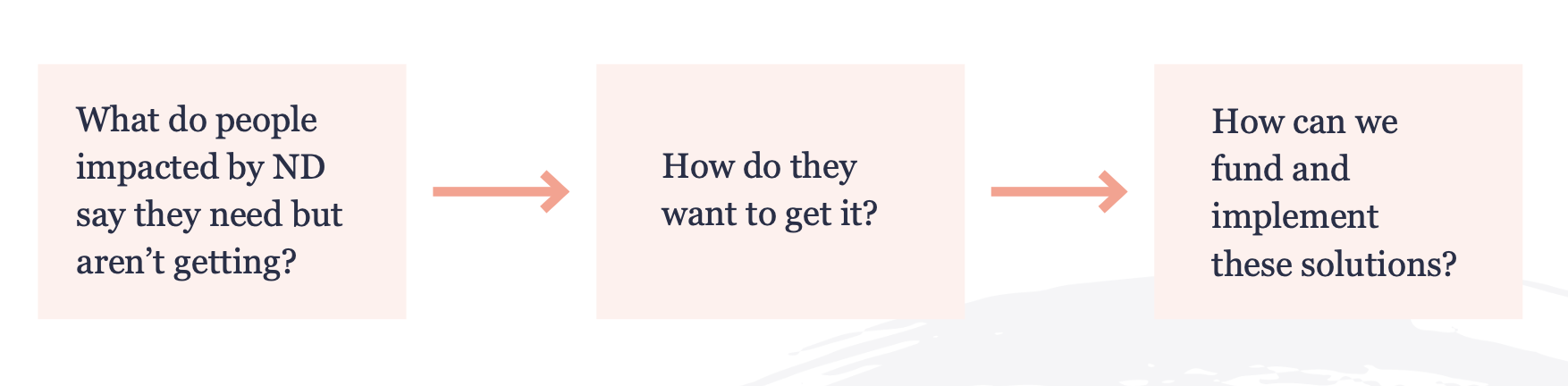
Discover needs. Hear from people living with ND and caregivers about what they need but aren't getting.
Learn
Extended Pilot, June 2022 (Denver)
Build teams of people with lived expertise alongside professionals. Volley potential solutions for appeal, viability, and sustainability.
Act
ND Congress, November 2022 (Washington, D.C.)
Reveal three to five finalized grant opportunities and the funding raised to support them.
All three convenings were held in 2022: the Pilot in January, the Extended Pilot in Denver that June, and the full ND Congress in Washington, D.C. that November.
"I believe in people working together as a team … because together, let me tell you, we can become super powerful. And what Adira has done is what no other organization that I'm aware of has done is to pull all the different neurodegenerative diseases together, because in my opinion, they do fall under one umbrella."
— Person living with Alzheimer's, ND Congress Pilot
Eight priorities, named by the people most impacted
Over two days of guided conversation, participants named the issues that
come up most often across the five diseases. They fell into eight primary categories.
The Eight Priority Areas
Care navigation support
Caregiving
Mental health support
Inclusion of perspectives of people living with ND
Better technology
Access to research and education
Convening groups to work together on solutions
Financial assistance
Mental Health Solutions
Build awareness among providers to ask about mental health and to treat it
Reduce friction in connecting with mental health and related external services
Offer more comprehensive care at medical facilities
Address the shortage of mental health providers
Frame care as "total health" — mental health integrated with physical health
"It's not about telling people what they need, it's about helping them with what they need."
The road ahead — and where it ended
All three gatherings took place. The Extended Pilot drew more than 50 people to Denver and online in June, where participants narrowed the Pilot's findings to six priorities for a fourth round of grants: peer to peer support, workforce development and training, road maps, decreasing stigma, caregiver education and training, and multidisciplinary care. The full ND Congress, the largest gathering of the series, met in Washington, D.C. on November 17 and 18.
Through these three gatherings and the workgroup sessions held between them, Adira fully designed a fourth round of competitive grants. That round was never deployed; Adira ceased operations the following month. The series' conclusions carried forward into the Blueprint for Action, which served as both the closing record of the ND Congress and guidance for the future.
Read the Outcomes Report
The Pilot report covers attendee demographics, the full conversations, disease basics for the five neurodegenerative diseases Adira focused on, and detailed findings. It runs 23 pages. The Extended Pilot report captures the June gathering in Denver, where more than 50 participants narrowed the Pilot's findings to six priorities for the fourth round of grants.